Guam's priority problems, and what other governments learned solving theirs
Ten problems where the public evidence is strongest, the money at stake is largest, and the most residents feel it. Each links to its evidence, names the numbers that would show it getting better, and points to a government that faced something similar.
Chosen from the public record on this site: OPA audits, the budget act, USAspending and the scorecard's sourced indicators. Ordered by our judgment of how many residents it touches and how much money is at stake; reasonable people can order them differently. Nothing here is a party platform: each problem predates the current and previous administrations, and each fix can be measured by anyone.
The fuel surcharge more than doubled in 2026 and the average household bill rose 56% in four months, to about $407 for 1,000 kWh. Generation shortfalls brought rotating outages and a federal emergency order, and GPA publishes no standard reliability measure.
FY2026 visitor arrivals were 688,599, 42% of FY2019, and September fell 30% from a year earlier with Korea down by half. Hotel tax collections are a third below FY2019, and tourism carries much of the private economy.
Spending per student rose 62% in three years to $21,070, yet 95% of fifth graders do not meet the math standard. GDOE has been a federal high-risk grantee for 23 years, and three OPA audits since 2024 questioned more than $54M in its purchases.
The FY2024 single audit of federal funds had 53 findings, 18 repeats, $22.6M questioned and disclaimers on five major programs, and it came out 298 days late. 102 OPA recommendations are still open, and nobody publishes how much is bought without competition.
The General Fund ran a $98M surplus in FY2024 and the fund balance reached $294M, but net position is negative $2.14B, the pension plan is 61.6% funded and debt is about $1B. S&P still rates general obligation bonds below investment grade, and Moody's called the business privilege tax cut credit negative.
GMHA has lacked Joint Commission accreditation since 2018, its net position is negative $295M, and it collects 33 cents per dollar billed. Separately, OPA questioned $241.1M in Medicaid provider payments over lapsed revalidations.
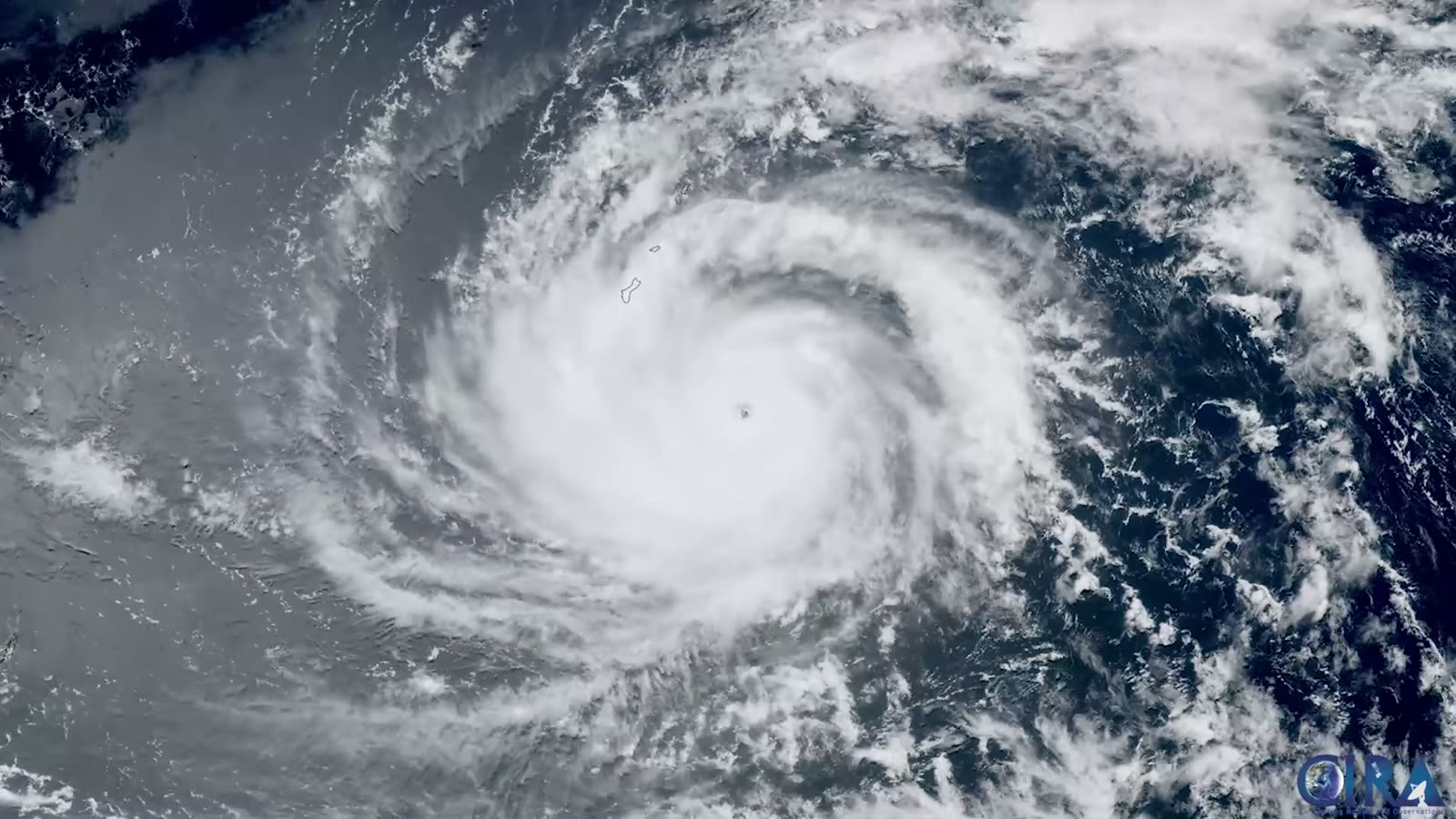
Typhoon Sinlaku did about $435M in public damage in 2026 on top of Mawar's $367M in 2023, FEMA denied individual assistance, and some Mawar claims are still pending. Civil Defense has $8.4M in FEMA reimbursements held back after warnings dating to 2011.
There is no official GDP after 2022, no population estimate since the 2020 Census, no crime report after 2023, and the agency budget, contract and staffing reports on guam.gov are offline. A government that cannot measure itself cannot be held to results.
The median single-family home sold for a record $460,000 in 2026 against a 2019 median household income of $58,289, and only 179 single-family permits were issued in 2025.
In March 2026, at the height of tax season, online tax filing stopped and refunds were not issued because the support contract for GovGuam's tax systems had lapsed six months earlier. Residents and businesses still move between agencies on paper for licenses and permits.
Each lesson lists what was done, what it achieved, what it cost or who criticized it, and whether it could work in Guam. Copying a headline without its trade-offs is how reforms fail.
Lessons from
Singapore
A city-state that treats clean government, fiscal rules and a single digital identity as core infrastructure. It also shows that this costs real money and depends on public trust that can be lost.
Independent anti-corruption agency plus very high pay for political leaders
What they did
The Corrupt Practices Investigation Bureau (CPIB) investigates both public and private sector graft. Ministerial pay is pegged to the median income of the top 1,000 Singapore citizen earners, minus 40%. In 2026 the benchmark for an entry-grade minister was raised to S$1.8 million, from S$1.1 million.
Result
Singapore scored 84/100 on Transparency International's 2025 Corruption Perceptions Index, ranked 3rd in the world and 1st in Asia Pacific. CPIB registered 68 new cases in 2025, of which one involved the public sector. In 22 cases (32%), public employees rejected bribes. CPIB reported an 86% clearance rate and a 91% conviction rate when withdrawn cases are counted.
Cost or criticism
High pay is politically contested. The 2026 raise was the first in 15 years, and opposition MPs proposed pegging pay to senior civil service grades instead. High pay also does not guarantee integrity: in October 2024, former Transport Minister S. Iswaran was jailed for 12 months for taking more than US$300,000 in gifts, the first minister convicted since 1975.
Fit for Guam
The part that transfers is the independent investigator with enough staff to follow up on audit findings, so recurring OPA procurement findings lead to enforcement. Singapore-level pay does not fit a General Fund of about $1B. Guam could instead pay competitively in the roles that carry the most risk: procurement officers, auditors and investigators.
The Net Investment Returns framework, added to the Constitution in 2008, lets the government spend at most 50% of the long-term expected real returns on reserves managed by GIC, MAS and Temasek. The expected return rates use a 20-year horizon. The elected President must agree to them, advised by the Council of Presidential Advisers. If the two sides disagree, 20-year historical averages apply.
Result
Under MOF's rules, the other 50% of returns is reinvested and past reserves stay protected unless the President agrees to draw on them. Each year's contribution is published in the Budget.
Cost or criticism
Opposition MPs have long argued that the total size of the reserves is not disclosed, which makes outside scrutiny hard. The rules also rely on a strong, independent second key (the President), which most governments do not have.
Fit for Guam
Guam cannot copy a sovereign wealth fund, but it can copy the rule. One option is a statutory cap that sends windfall revenue to a rainy-day or debt reserve, with a second sign-off (for example OPA or the Legislature's budget office) needed to draw on it. This deals directly with the recurring General Fund deficits and the reliance on one-time federal money.
The Housing & Development Board builds and sells subsidized leasehold flats, mainly on 99-year leases, and gives buyers housing grants. Resale flats trade on an open market.
Result
In FY2024, 76.0% of Singapore's resident population lived in HDB flats and 73.0% lived in HDB flats they owned (sold flats).
Cost or criticism
It is expensive and runs at a loss every year. HDB reported spending of more than S$6 billion in FY2024 to keep housing affordable, covered by a government grant. Resale prices in desirable towns have reached S$1 million or more, which raises affordability concerns.
Fit for Guam
This maps to GHURA and Guam Housing Corporation, given high rents linked to military buildup demand. The part that transfers is government land plus homeownership subsidies aimed at first-time local buyers. The open-ended annual deficit is a warning: budget the subsidy explicitly every year.
One digital identity and pre-filled forms (Singpass and Myinfo, GovTech)
What they did
GovTech runs Singpass, a national login used by government and private services, and Myinfo, which pre-fills forms with data the government already holds, with the user's consent each time.
Result
Singpass has 5.5 million users, covering 97% of citizens and permanent residents aged 15 and over, and handles more than 41 million transactions a month. More than 1,800 services use Myinfo, which GovTech says cuts application time by up to 80%.
Cost or criticism
The cost is large: government ICT procurement was estimated at up to S$3.8 billion in FY2021. Centralized data also concentrates risk. The 2018 SingHealth breach exposed personal data of about 1.5 million patients. In 2021 the government admitted that TraceTogether contact-tracing data, used by about 80% of residents, could be accessed by police, and it then passed limits by law.
Fit for Guam
A single GovGuam login with pre-filled forms would serve Revenue and Taxation, business licensing and permits (see permit.gu). It should start small and set legal limits on data reuse first, since trust is easier to keep than to rebuild.
Measures and publicly ranks government service quality with consequences for poor performers, and digitized fast. These results come with a political system that independent rights groups criticize sharply.
Star ratings for service centers, with consequences
What they did
The UAE Prime Minister's Office rates government service channels (centers, websites, apps, call centers) from 2 to 7 stars, using customer surveys and mystery shoppers. Results are announced publicly. The worst performers get a 60-day grace period, then a second evaluation that decides whether their management teams are replaced.
Result
In 2023, 124 federal service channels from 25 entities were rated, and one center improved from 4 to 6 stars in a year. Dubai's 2024 government indices reported customer happiness of 93.8%, employee happiness of 86.7% and a mystery shopper score of 95.8%.
Cost or criticism
The scores are produced and published by the government itself, with no independent audit found. Publicly naming and replacing managers can push staff to manage the metric instead of the service.
Fit for Guam
A transferable, low-cost tool: mystery-shop and publicly rate the counters people actually use (Revenue and Taxation, DPW, GMHA registration, Motor Vehicle), and report results each quarter. Independent scoring by OPA or the University of Guam would avoid the self-grading problem.
Launched in 2018 and rolled out in five phases across 45 government entities, the strategy removed paper from internal and customer transactions. Dubai declared it complete in December 2021.
Result
The Dubai government reports savings of more than AED 1.3 billion and more than 14 million staff hours, with more than 336 million sheets of paper eliminated, across more than 1,800 digital services.
Cost or criticism
The savings are government-reported and not independently audited. Going fully digital also needs strong connectivity and help for residents who are not online.
Fit for Guam
Phasing agency by agency, with each phase starting at the highest-volume agencies, is a realistic model for GovGuam. A paperless procurement file in each agency would also give OPA an audit trail by default.
Business licensing in minutes (Invest in Dubai single window)
What they did
One online platform combines trade licensing steps. An Instant Licence can be issued in at most five minutes, and an AI-assisted version targeting 17 seconds is due to roll out by the end of 2026.
Result
Licences issued through the platform rose from 16,584 in 2021 to 95,543 in 2024. The platform has handled 1.3 million transactions and 280,916 business incorporations since 2021.
Cost or criticism
Fast licensing moves risk to inspections and enforcement after the fact. Rising licence counts also reflect Dubai's wider boom, so not all of the growth can be credited to the platform.
Fit for Guam
This matches the permit.gu idea directly. A single Guam window across Revenue and Taxation business licences, DPW building permits and Guam EPA clearances, with a published time-to-licence clock, would be measurable from day one.
Dubai's Department of Economy and Tourism pursues visitor growth under the D33 economic agenda, adding hotel capacity and air links.
Result
Dubai had 19.59 million international overnight visitors in 2025, up 5% and the third record year in a row. Hotel occupancy was 80.7% across more than 154,000 rooms.
Cost or criticism
Human Rights Watch's 2026 report documents abuse of migrant workers under the kafala sponsorship system (wage theft, recruitment fees, passport confiscation), weak heat protections, a mass trial that upheld life sentences for 43 people, and criminal penalties for peaceful online criticism. Much of the service economy depends on that labor system.
Fit for Guam
The transferable parts are the Guam Visitors Bureau setting public numeric targets and tracking air-seat capacity. Dubai's labor model is not compatible with US law and should not be copied.
Official homicides fell steeply after the 2022 state of exception, and tourism hit records. Major human rights organizations document mass arbitrary detention and deaths in custody, and the IMF had the Bitcoin legal-tender experiment largely unwound.
Security: the state of exception
What they did
Since March 2022 a state of exception has suspended some due process rights. HRW reports it had been extended 45 times. Police and soldiers carried out mass arrests of suspected gang members.
Result
Officially, homicides fell to 82 in 2025 (1.3 per 100,000), from 114 in 2024 (1.9). The rate peaked at about 105 to 106 per 100,000 in 2015. Gallup's 2024 survey found 88% of Salvadorans feel safe walking alone at night, a record for the country.
Cost or criticism
HRW reports more than 90,000 arrests, including more than 3,000 children, a prison population of about 118,000 (more than double capacity), at least 458 deaths in custody, and mass trials. Amnesty International (July 2026) counts at least 470 deaths in custody and says the pattern could amount to crimes against humanity. About 8,000 detainees were released after reviews found no gang ties. InSight Crime reports that since 2019 the official count excludes deaths in clashes with security forces and bodies found in clandestine graves, which makes outside comparison harder.
Fit for Guam
Guam's crime profile and US constitutional limits make this model neither legal nor needed. One narrow lesson does transfer: publish crime data under a fixed, standard method so trends can be checked independently.
The 2021 Bitcoin Law made merchants accept Bitcoin and created the state Chivo wallet. To get a US$1.4 billion, 40-month IMF Extended Fund Facility (approved February 26, 2025), the Legislative Assembly made acceptance voluntary, required taxes to be paid only in US dollars, and agreed to unwind the government's role in Chivo.
Result
A government survey from October 2024 found only 7.5% of the population had used Bitcoin for a transaction in the past year. By October 2026 the IMF reported Chivo's majority ownership had moved to a private operator and that no further government Bitcoin accumulation is planned beyond documented donations. It also reported 4.5% real GDP growth in 2026 and tax revenue of 22.8% of GDP.
Cost or criticism
The program needed waivers for unmet Bitcoin-related targets. The IMF still flags public debt of about 85% of GDP and weak beneficial-ownership transparency and anti-corruption effectiveness. Public statements about daily Bitcoin purchases were later contradicted by IMF reporting.
Fit for Guam
Low fit as policy. The governance lesson is that a flagship government technology bet with little public uptake should be measured early, and lenders or federal partners can force a reversal. That is relevant to any large Guam IT or energy procurement.
The government marketed improved safety, surf tourism and international events, and added air routes.
Result
El Salvador recorded 4.1 million international visitors in 2025, an all-time high, up from 3.9 million in 2024, and passed 1 million in Q1 2026.
Cost or criticism
Popular destinations are reporting capacity strain during peak seasons. The growth is tied to the same security policy that rights groups criticize.
Fit for Guam
The Guam Visitors Bureau lesson is that perceived safety and new air routes drive arrivals. Guam can compete on both lawfully, for example by publishing visitor-safety data and adding routes beyond Japan and Korea.
A small country (about 1.3 million people) that made every government service available online on shared data-exchange infrastructure. It also shows that digital government needs steady maintenance funding and security work.
X-Road data exchange and the once-only principle
What they did
Since 2001, X-Road has connected public and private databases so agencies query each other directly and citizens provide each piece of data only once.
Result
e-Estonia says X-Road saves more than 1,345 years of working time a year, handles 2.2 billion transactions a year, and supports more than 3,800 e-services with about 78,000 organizations as indirect users. 98% of tax declarations are filed electronically.
Cost or criticism
The time-saved figure comes from Estonia's promotion agency and has varied by source and year (an older e-Estonia page says 844 years), so treat it as an estimate. Estonia's National Audit Office found public IT spending doubled from EUR 123 million in 2019 to EUR 257 million in 2024, that ministries say funding still falls short, and that no central overview of IT spending existed.
Fit for Guam
A small data-exchange layer between Revenue and Taxation, DPW, Guam EPA, BBMR and GSA would let auditors and the public follow contract and permit data across agencies. X-Road is open source, so licensing costs are low. Maintenance staff must be budgeted from the start.
Estonia digitized services one at a time. The last one, divorce, went online on December 1, 2024.
Result
About half of divorce applications were already filed online soon after launch, along with 56% of marriage applications and 85% of birth registrations. The divorce process went from two in-person meetings to one.
Cost or criticism
'100% online' does not mean 100% used online: uptake for many services is still near half, so in-person channels remain.
Fit for Guam
Start with the highest-volume GovGuam transactions and publish an online-share figure for each service, so progress is measured by use rather than by launch announcements.
Digital ID security: open about incidents, fast to respond
What they did
Estonia's national ID card is the key to e-services. When problems came up, the state blocked certificates or patched systems quickly and told the public.
Result
In November 2017, more than 760,000 ID card certificates were suspended because of a chip flaw (ROCA). Updates were pushed through an app, so cards did not need replacing, and no identity theft was reported. In 2021, about 300,000 ID photos were downloaded through a portal flaw. The attacker was caught and the flaw fixed.
Cost or criticism
Centralized identity creates single points of failure, and Estonia's own e-Estonia agency cites legacy systems that need constant attention and resources.
Fit for Guam
Any GovGuam digital ID or portal should come with a published incident-response plan and paid independent penetration testing. Guam's typhoon exposure also means backups held off-island.
The closest US island peer: an oil-dependent grid and a tourism economy facing the same energy and visitor pressures as Guam, with legislated targets and a new visitor fee for climate resilience.
Renewable Portfolio Standard with interim milestones
What they did
Hawaii law requires 100% renewable electricity by 2045, with interim milestones including 40% by 2030. Hawaiian Electric reports progress every year.
Result
Hawaiian Electric reported a consolidated 37% RPS in 2025 under the new generation-based method (46.6% under the old sales-based method), despite electricity load rising 2.5% in 2025, the biggest yearly increase since 2004.
Cost or criticism
Prices are still the highest in the nation. EIA reported Hawaii's average residential bill at $213 a month in 2024, about 2.4 times the US average of $144, because most grid power still comes from petroleum. A change in how RPS is measured shifted the headline figure by about 10 points.
Fit for Guam
Very close match. Guam Public Law 35-46 sets 50% renewables by 2035 and 100% by 2045 for the Guam Power Authority. Guam can borrow Hawaii's annual public status report, but should fix the measurement method in law so progress figures cannot change with the accounting.
Act 96, signed June 2, 2025, raised the transient accommodations tax by 0.75 points from January 1, 2026, and for the first time applied it to cruise ship passengers. The money is earmarked for environmental stewardship, hazard mitigation and sustainable tourism.
Result
It is projected to raise about $100 million a year. No measured outcomes are available yet because spending only starts in 2026.
Cost or criticism
Cruise Lines International Association and local businesses sued, calling it unconstitutional. A federal district court dismissed most of the claims, but some litigation continues.
Fit for Guam
Guam already has a hotel occupancy tax. A small dedicated increase for typhoon hardening and beach and reef upkeep, with a public project list, follows Hawaii's design. The cruise-tax litigation shows the legal risk of extending such a fee to ships.
A US territory that went through a federally imposed fiscal oversight board (PROMESA, 2016). It cut debt sharply, but at high cost and with lasting local opposition.
Debt restructuring under federal oversight
What they did
Congress created the seven-member Financial Oversight and Management Board under PROMESA. It certifies fiscal plans and budgets and ran court-supervised restructurings.
Result
GAO (July 2025) found public debt fell from $65.7 billion to $53.2 billion between FY2016 and FY2022. The 2022 general obligation deal replaced $34.3 billion of obligations with $7.4 billion in new bonds. Debt-to-GNP fell from 93% to 67%, and FY2022 government-wide statements showed a $1.9 billion surplus. WLRN reports total debt fell from about $73 billion to $31 billion over ten years.
Cost or criticism
Costs ran far above estimates. The Bond Buyer reports $1.5 billion paid from the General Fund by June 2023, against a $370 million projection, and WLRN cites more than $2 billion on consultants and lawyers. Critics point to cuts of about half the University of Puerto Rico budget, about one third of public schools closed, an unelected board with budget veto, and flat economic growth. GAO notes pension liabilities of $57.0 billion and audited statements for FY2023 and FY2024 still missing as of June 2025.
Fit for Guam
This is the outcome to avoid. Guam keeping its own fiscal discipline (credible multiyear plans, on-time audits, funded pensions) is what keeps a federal board out. It is a strong argument for the reserves and transparency lessons above.
Under board oversight, Puerto Rico's power utility (PREPA) went through restructuring and private operation of the grid.
Result
WLRN reports that blackouts have become normal despite the restructuring. GAO lists electricity reliability as a continuing structural risk.
Cost or criticism
Handing operations to a private contractor did not by itself deliver reliability, and long-term contracts limited public control.
Fit for Guam
Directly relevant to GPA and GWA as public authorities. Any privatization or long-term contract should come with published reliability standards (outage hours) and penalties written into the contract.
 DOGE